Top aluminum forge,steel forging,billet machining for USA
About Us| Contact Us

Steel Forging vs. Casting: When to Choose Forged for Superior Performance

» Steel Forging Services » Steel Forging vs. Casting: When to Choose Forged for Superior Performance
When manufacturing critical metal components, the choice between steel forging and casting can significantly impact product performance, durability, and safety. While both methods transform raw metal into functional parts, they create fundamentally different internal structures that determine how components perform under stress. This comprehensive guide explores when and why steel forging delivers superior results for demanding applications.

Key Differences Between Steel Forging and Casting

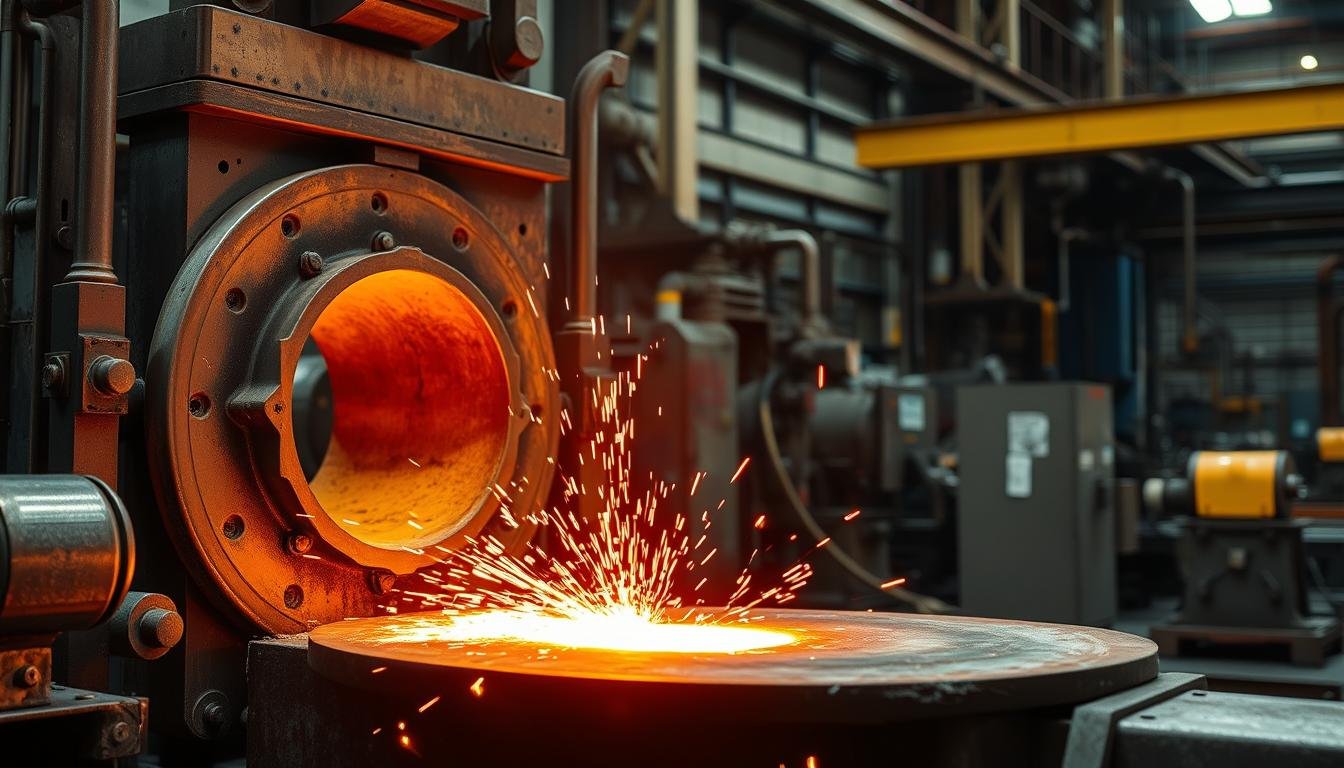
Steel forging process showing heated metal being shaped with industrial equipment

What is Steel Forging?

Steel forging is a manufacturing process that shapes metal using localized compressive forces. The process involves heating steel to specific temperatures and then applying pressure through hammers, presses, or specialized forging equipment. This reshapes the metal while also refining its grain structure, creating components with exceptional strength and durability.

The forging process dates back thousands of years but has evolved with modern technology to create precision components for the most demanding applications. Today’s advanced forging techniques combine traditional metallurgical principles with computer-controlled precision.

What is Steel Casting?

Casting involves melting metal and pouring it into a mold where it solidifies into the desired shape. While casting can create complex geometries in a single step, the resulting internal structure typically lacks the refined grain alignment and density achieved through forging.

Cast components may contain microscopic voids, inclusions, or porosity that can compromise structural integrity under high stress or repeated loading. However, casting remains valuable for producing complex shapes that would be difficult or impossible to forge.

Comprehensive Comparison: Steel Forging vs. Casting

Comparison Categories Steel Forging Casting Steel
Strength and Durability ✅Higher due to dense, uniform grain structure Potentially lower due to air pockets and inclusions
Tensile Properties ✅Superior tensile strength and resistance Lower tensile strength
Fatigue Resistance ✅Better resistance against fatigue failure Potentially lower fatigue resistance
Complex Geometries Require multiple steps of effort to achieve complex shape ✅Can achieve complex shape in one session
Dimensional Accuracy ✅Better accuracy and tighter tolerances Potential inconsistencies
Surface Finish ✅Smoother surfaces, reduced post-processing Might require more machining due to air pocket
Heat Treatment Response ✅Responsive for controlled material properties Less predictable response
Grain Structure ✅Directional grain flow for improved properties No directional grain structure
Weight-to-Strength Ratio ✅High strength-to-weight ratio Bulkier parts may be needed
Resistance to Corrosion ✅Improved due to denser structure Naturally forming oxide layer for resistance
Engineering Consistency ✅Controlled material characteristics Variability in material properties
Critical Applications ✅Structural Members and load-bearing capabilities Limited suitability for critical applications
Focus Usage Enhanced mechanical performance and precision Less demanding applications and complex shapes
Ideal Industry Aerospace, automotive, medical devices, etc. Consumer goods, simple parts, non-critical sectors

Common Steel Forging Methods

Impression die forging process showing metal being formed between two dies

Understanding the different forging methods helps in selecting the right process for your specific application requirements. Each method offers distinct advantages depending on part complexity, volume, and performance specifications.

Open Die Forging

In open die forging, metal is shaped between flat or simply shaped dies that don’t completely enclose the workpiece. This method is ideal for larger components and allows for greater control over the grain structure. Open die forging is commonly used for shafts, discs, rings, and custom shapes that require superior mechanical properties.

Closed Die Forging

Also known as impression die forging, this method shapes metal by forcing it into a die cavity that contains the negative image of the desired part. Closed die forging produces more complex shapes with tighter tolerances than open die forging. It’s ideal for high-volume production of components requiring consistent quality and excellent mechanical properties.

Roll Forging

Roll forging reduces the cross-section of round or flat bar stock by passing it through opposing rolls with progressively shaped grooves. This process is particularly effective for parts with elongated shapes like axles, leaf springs, and hand tools. Roll forging creates a favorable grain flow that enhances component strength along its length.

Temperature Classifications in Steel Forging

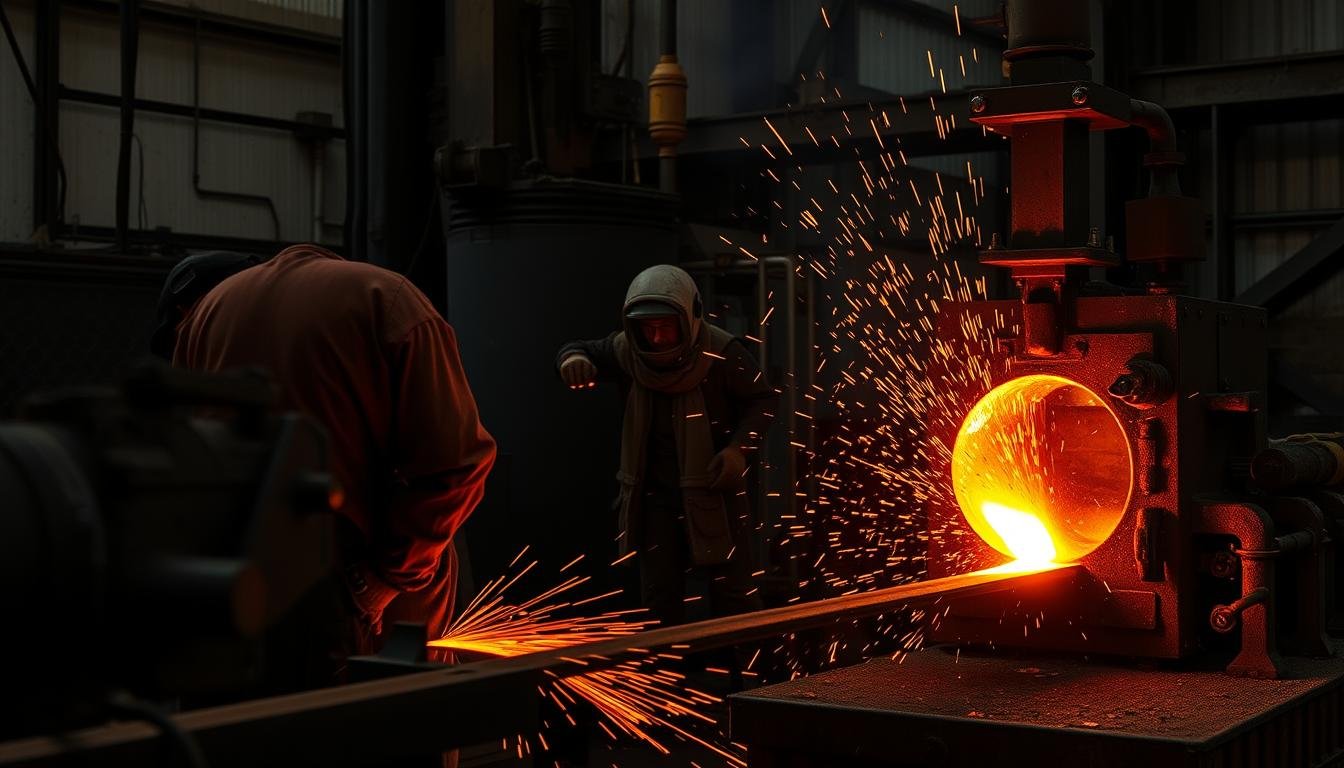
Hot steel forging process showing glowing metal being worked

Hot Forging

Performed at temperatures above the steel’s recrystallization point (typically 950-1250°C), hot forging offers excellent metal formability and lower forming forces. This process allows for significant deformation of the material while maintaining uniform properties. Hot forging is ideal for creating complex shapes from steel and is the most common method for industrial applications.

Warm Forging

Operating at intermediate temperatures (750-950°C), warm forging balances the benefits of both hot and cold processes. It requires less energy than hot forging while offering better precision than hot forging and greater formability than cold forging. Warm forging produces less scaling on the workpiece surface and allows for tighter tolerances.

Cold Forging

Performed at room temperature or slightly elevated temperatures (up to 150°C), cold forging produces parts with excellent dimensional accuracy and surface finish. The process increases strength through work hardening but requires greater force and limits material formability. Cold forging is ideal for high-precision, high-volume parts that don’t require extensive deformation.

Need Expert Guidance on Your Steel Component Requirements?

MAIKONG’s engineering team can help determine the optimal forging method for your specific application. Contact us for a consultation and competitive quote.

Get a Free Consultation

Why Steel Forging Creates Stronger Components

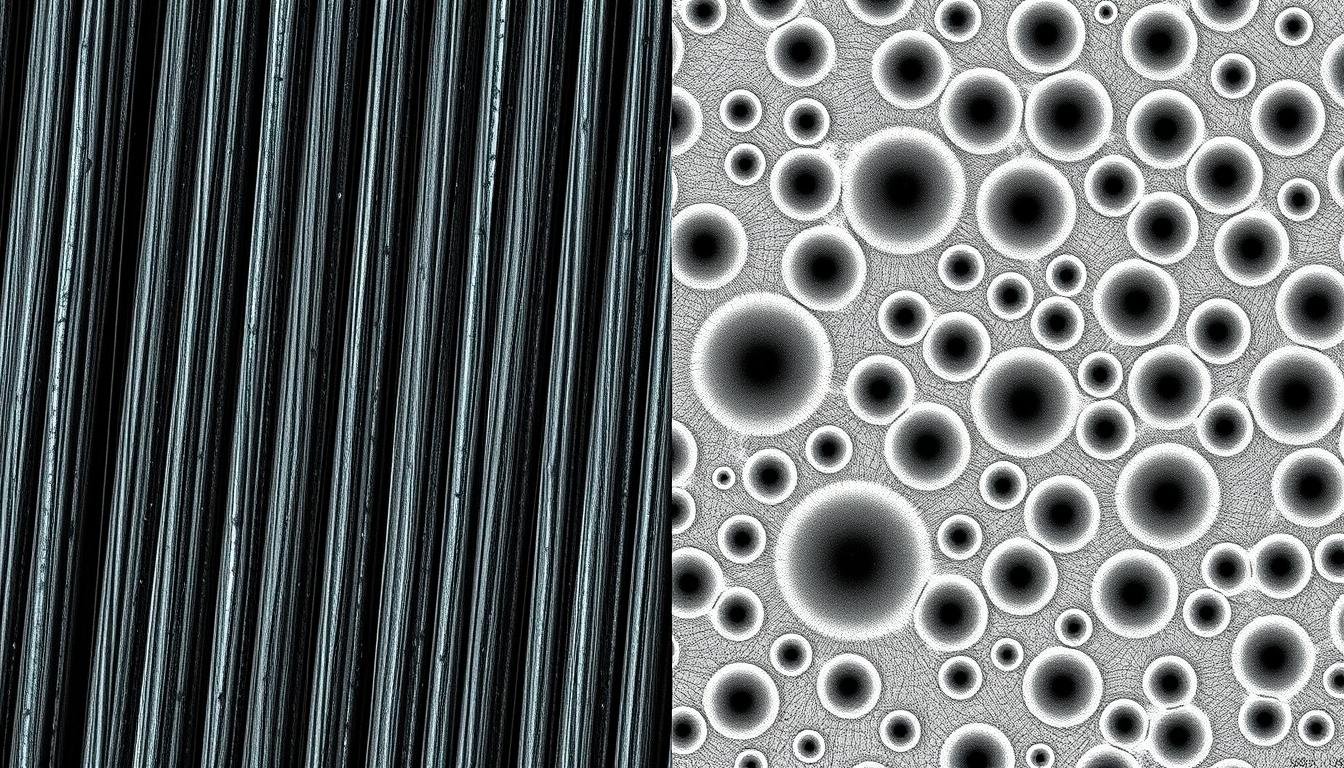
Microscopic view of steel grain structure comparison between forged and cast steel

Refined Grain Structure

The forging process fundamentally alters steel’s microstructure by breaking down the cast ingot structure and refining the grain size. As pressure is applied during forging, the metal’s grain structure becomes more uniform and directionally aligned. This refined structure significantly enhances mechanical properties, particularly strength and toughness.

Unlike casting, where grains form randomly as the metal solidifies, forging creates a predictable, controlled grain flow that follows the part’s geometry. This directional grain flow is particularly beneficial for components that experience stress in specific directions during service.

Elimination of Defects

Forging’s compressive forces effectively close internal voids and heal micro-cracks that might be present in the starting material. The process also breaks up and distributes any inclusions or impurities, minimizing their negative impact on mechanical properties.

Cast components, by contrast, can contain shrinkage cavities, gas porosity, and inclusions that form during solidification. These defects create stress concentration points that can lead to premature failure, especially under fatigue loading conditions common in critical applications.

Ideal Applications for Steel Forging

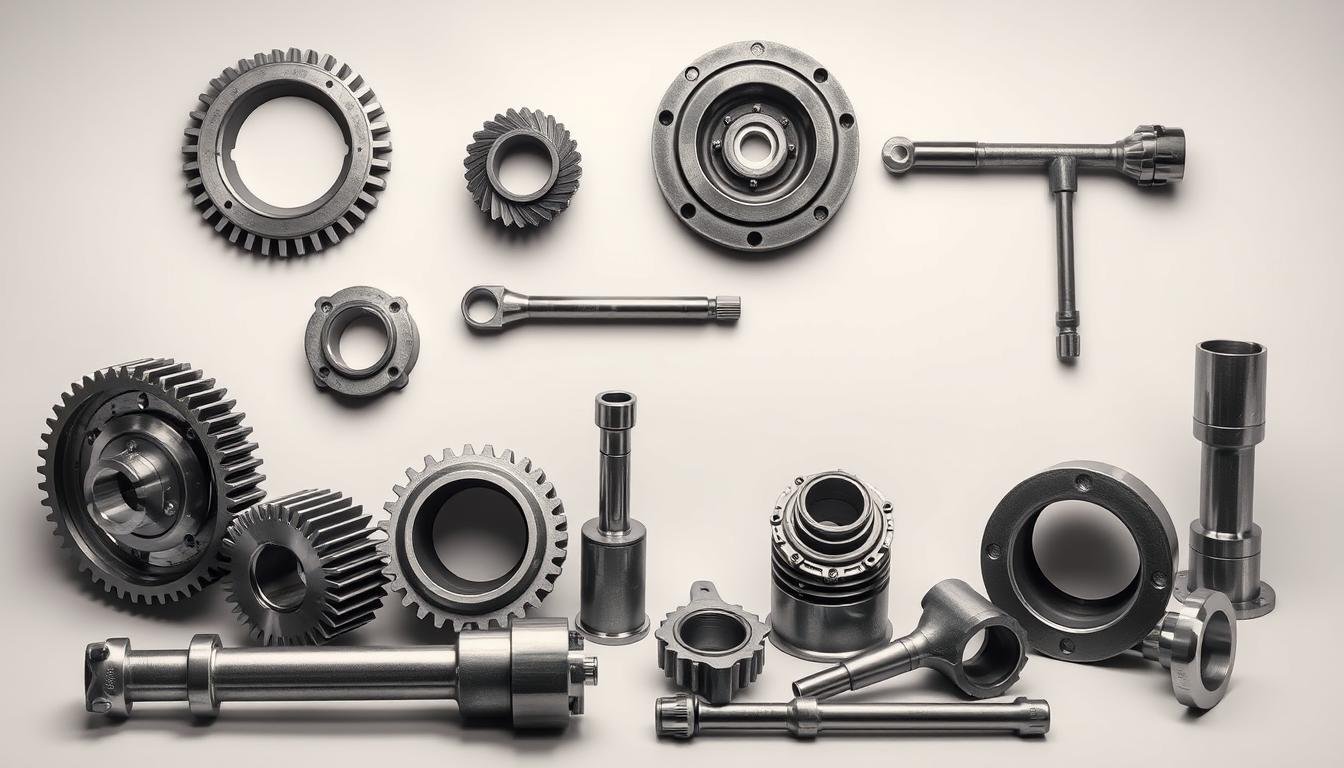
Various industrial forged steel components for critical applications

The superior mechanical properties of forged steel make it the preferred choice for components where failure is not an option. Here are the industries and applications where forged components deliver critical performance advantages:

Automotive & Transportation

  • Crankshafts and connecting rods
  • Transmission gears and shafts
  • Steering knuckles and control arms
  • Axle beams and components
  • Heavy-duty truck and trailer parts

Industrial & Heavy Equipment

  • Mining equipment components
  • Construction machinery parts
  • Oil and gas drilling equipment
  • Power generation components
  • Agricultural equipment

Aerospace & Defense

  • Landing gear components
  • Jet engine discs and shafts
  • Structural airframe components
  • Missile and rocket parts
  • Military vehicle components

MAIKONG’s Comprehensive Steel Forging Capabilities

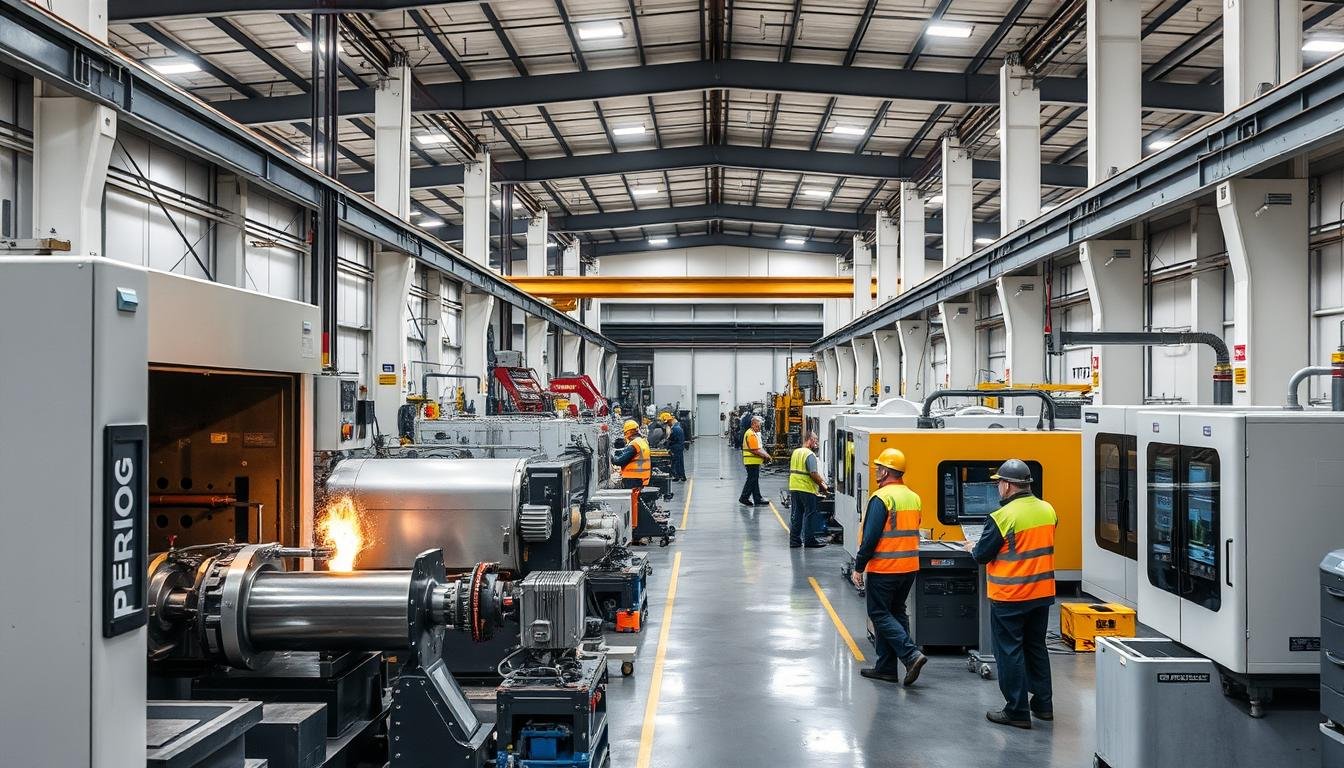
MAIKONG's modern steel forging facility with advanced equipment

At MAIKONG, we offer end-to-end steel forging solutions with 60+ CNC machines and 100+ tons of metal processing capacity per month. Our comprehensive services ensure your components meet the highest quality standards from design to delivery.

Design & Engineering

Our engineering team utilizes advanced CAD/CAM systems to optimize component design for the forging process. We conduct detailed material analysis and finite element analysis (FEA) to ensure your parts will perform as expected under real-world conditions.

Material Selection

We work with a wide range of steel alloys to match your specific application requirements. Our metallurgical expertise ensures the optimal balance of strength, durability, machinability, and cost-effectiveness for your components.

Tooling Design

Precision tooling is critical to forging success. Our experienced tooling engineers design and maintain dies that ensure consistent quality and optimal material flow during the forging process.

Forging Process

MAIKONG’s forging workshop accommodates diverse specifications with capabilities in open die, closed die, and specialized forging techniques. Our controlled processes ensure optimal grain flow and mechanical properties.

Heat Treatment

Our in-house heat treatment facilities allow precise control of material properties. We conduct comprehensive statistical analysis and documentation to ensure consistent results that meet or exceed industry specifications.

Precision Machining

Our state-of-the-art CNC machining center transforms forged components into finished parts with tight tolerances. We offer turning, milling, swiss machining, multi-axis machining, and surface grinding services.

Ready to Discuss Your Steel Component Requirements?

Contact MAIKONG today for competitive pricing and expert manufacturing solutions.

Quality Assurance in Steel Forging

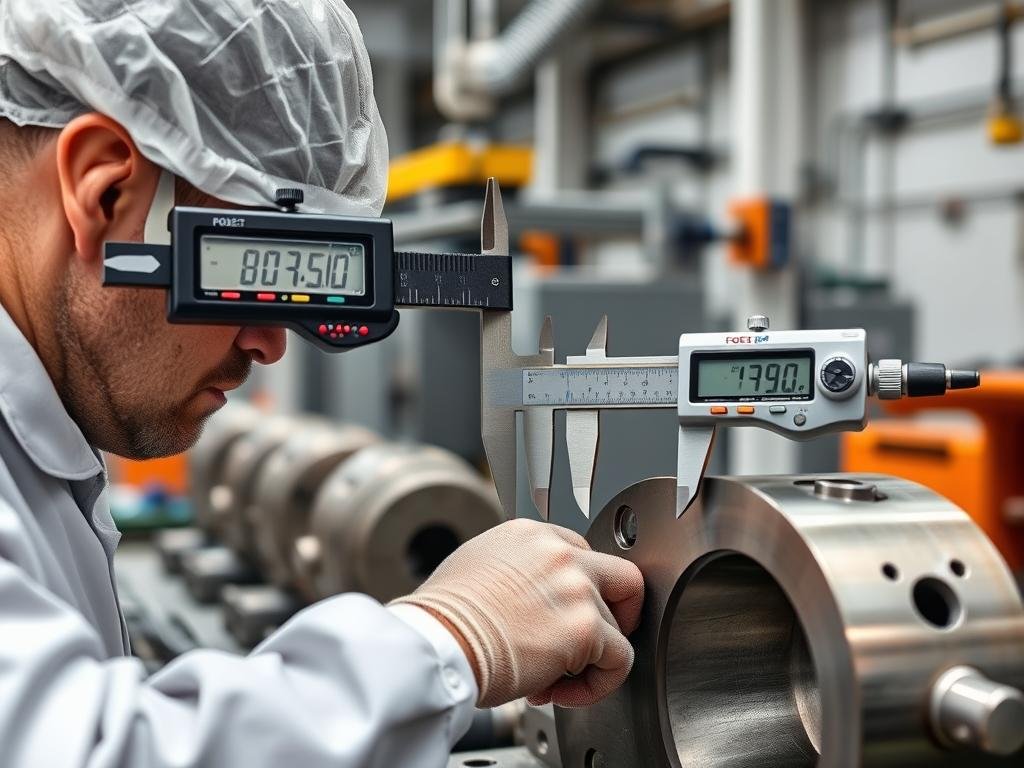
Quality control inspection of forged steel components

At MAIKONG, quality is built into every step of our process. Our ISO 9001:2015 certified quality management system ensures consistent excellence in all our forged components.

Inspection Methods

  • Dimensional verification using precision CMM equipment
  • Non-destructive testing including ultrasonic, magnetic particle, and dye penetrant inspection
  • Mechanical property testing for tensile strength, yield strength, and hardness
  • Metallurgical analysis to verify grain structure and material composition
  • Surface finish inspection and documentation

Documentation & Traceability

  • Complete material certification and traceability
  • Detailed inspection reports for all critical dimensions
  • Heat treatment certification and verification
  • Statistical process control data
  • First article inspection reports for new components

Steel Forging vs. Alternative Manufacturing Methods

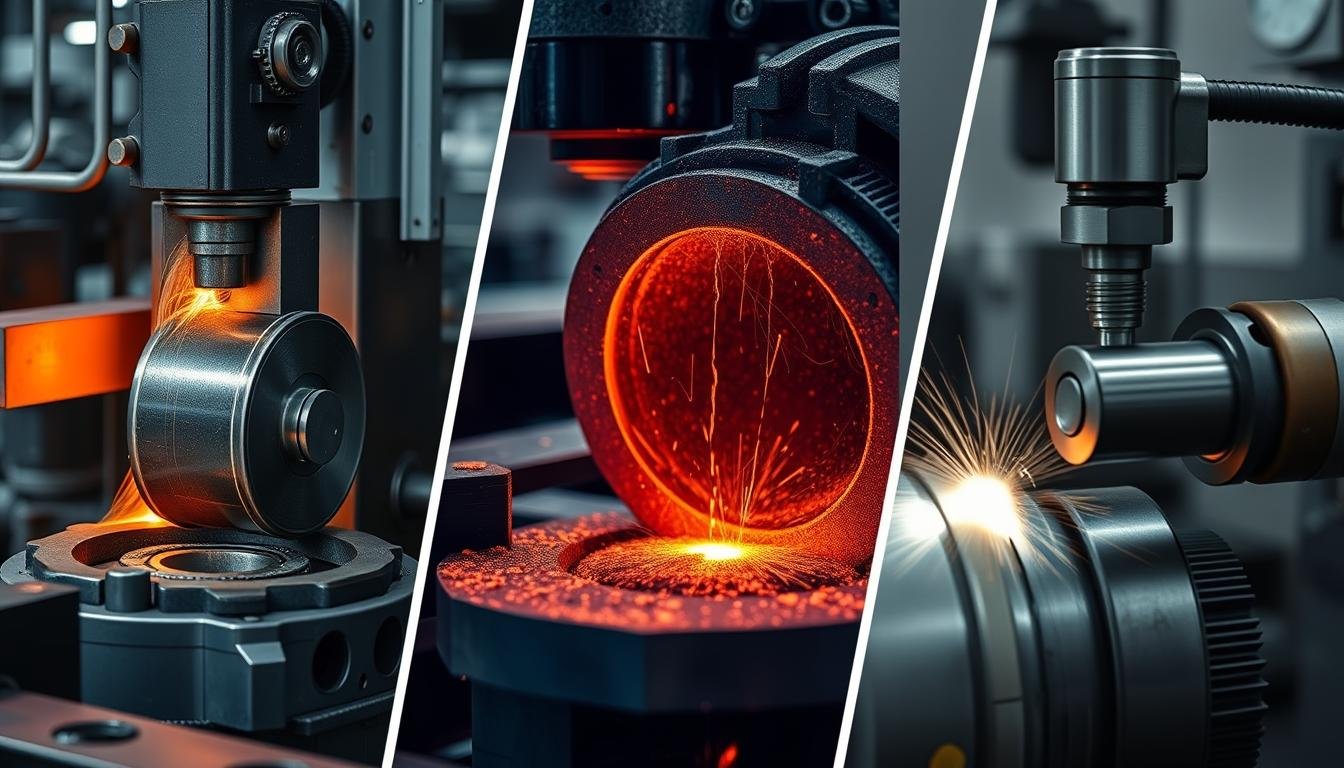
Comparison of manufacturing methods showing forging, casting, and machining processes

While forging offers superior mechanical properties, other manufacturing methods may be appropriate depending on your specific requirements. Understanding these alternatives helps in making informed decisions for your components.

Forging vs. Machining

Machining creates parts by removing material from solid stock. While offering excellent dimensional accuracy, machined parts lack the enhanced grain structure and strength of forged components. Additionally, machining cuts across the material’s grain structure, potentially reducing strength in critical directions.

MAIKONG offers both forging and precision CNC machining services, allowing us to recommend the optimal process for your specific application requirements.

Forging vs. Casting

As detailed earlier, casting involves pouring molten metal into molds. While casting can create complex geometries in a single step, the resulting components typically have lower mechanical properties than forged parts due to their coarser grain structure and potential for internal defects.

For non-critical applications where complex geometries are required, casting may be appropriate. For components subject to high stress or fatigue loading, forging is generally preferred.

Forging vs. Fabrication

Fabrication involves joining multiple pieces through welding or other methods. While fabrication offers design flexibility, welded joints can create stress concentration points and heat-affected zones that may compromise structural integrity under certain conditions.

For maximum structural integrity in critical applications, single-piece forged components often provide superior performance compared to fabricated assemblies.

Cost Considerations for Steel Forging

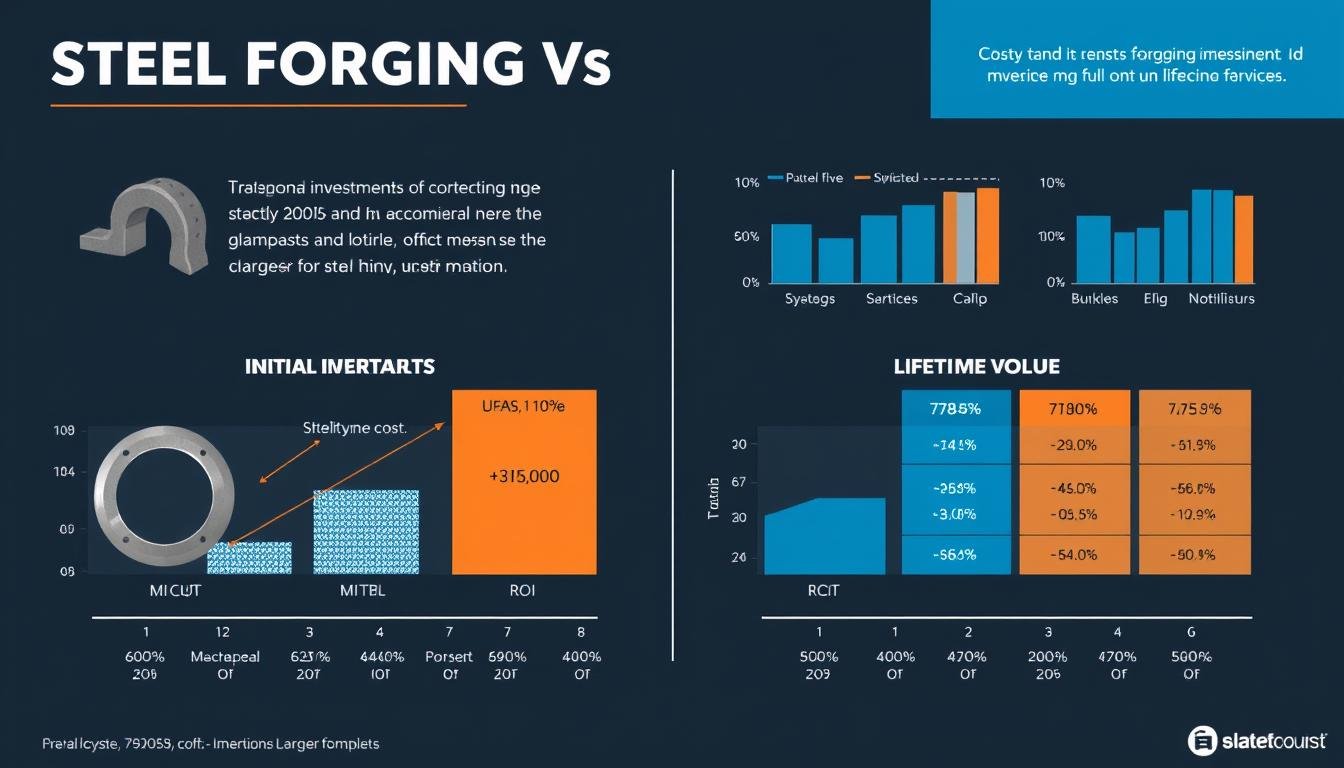
Cost analysis of steel forging showing value over product lifecycle

Initial vs. Lifecycle Costs

While forged components may have higher initial costs compared to some alternatives, they often deliver lower total lifecycle costs due to their superior durability, reliability, and performance. When evaluating manufacturing options, consider:

  • Extended service life of forged components
  • Reduced maintenance and replacement costs
  • Lower risk of catastrophic failure
  • Enhanced safety and performance
  • Potential weight reduction through optimized design

Volume Considerations

The economics of forging improve with production volume. While tooling costs represent a significant initial investment, they are amortized across the production run. MAIKONG offers competitive pricing structures for both prototype and high-volume production:

  • Prototype and small batch production
  • Medium volume production runs
  • High-volume ongoing production
  • Flexible scheduling to accommodate changing demands
  • Cost-effective solutions through global manufacturing capabilities

Why Choose MAIKONG for Your Steel Forging Needs

MAIKONG team members working with clients on steel forging projects

Technical Expertise

Our engineering team brings decades of combined experience in metal forging and precision manufacturing. We understand the metallurgical principles and process parameters that ensure optimal component performance.

Comprehensive Capabilities

From design assistance to final inspection, MAIKONG offers end-to-end manufacturing solutions. Our integrated services include forging, heat treatment, machining, and surface finishing—all under one roof for seamless quality control.

Competitive Pricing

Our efficient operations and strategic location in GD, SZ allow us to offer highly competitive pricing without compromising quality. We’re actively seeking US distributors to expand our market presence.

Quality Assurance

Our ISO 9001:2015 certified quality management system ensures consistent excellence in all our products. We maintain rigorous inspection protocols and complete documentation for full traceability.

Responsive Service

We understand the importance of timely communication and delivery. Our dedicated project managers ensure your requirements are met at every stage of production.

Global Capabilities

With manufacturing facilities in GD, SZ and a growing international presence, MAIKONG is positioned to serve clients worldwide with efficient logistics and local support.

Start Your Steel Forging Project with MAIKONG Today

Contact our team for expert guidance, competitive quotes, and superior manufacturing solutions.

Request a Quote

Conclusion: Making the Right Choice for Your Application

High-performance forged steel components in demanding applications

The choice between steel forging and alternative manufacturing methods depends on your specific application requirements, performance expectations, and budget considerations. For components subject to high stress, fatigue loading, or safety-critical applications, forged steel typically offers the optimal combination of strength, durability, and reliability.

MAIKONG’s comprehensive manufacturing capabilities allow us to recommend and deliver the most appropriate solution for your needs. Whether you require the superior mechanical properties of forged components or the precision of CNC machining, our team is ready to support your project from concept to completion.

Contact MAIKONG today to discuss your steel component requirements and discover how our expertise can enhance your products’ performance and reliability.

Request More Information

Precision medical device components manufactured through billet machining Various steel forged components manufactured by MAIKONG Medical device applications for metal forge parts