The forging press stands as a cornerstone of modern metal manufacturing, transforming raw materials into precision components through controlled force application. At MAIKONG, we’ve mastered the art and science of forging press technology, delivering exceptional quality metal components through our advanced manufacturing processes. This comprehensive guide explores the fundamental principles that drive effective forging press operations and how these principles translate into superior forged products.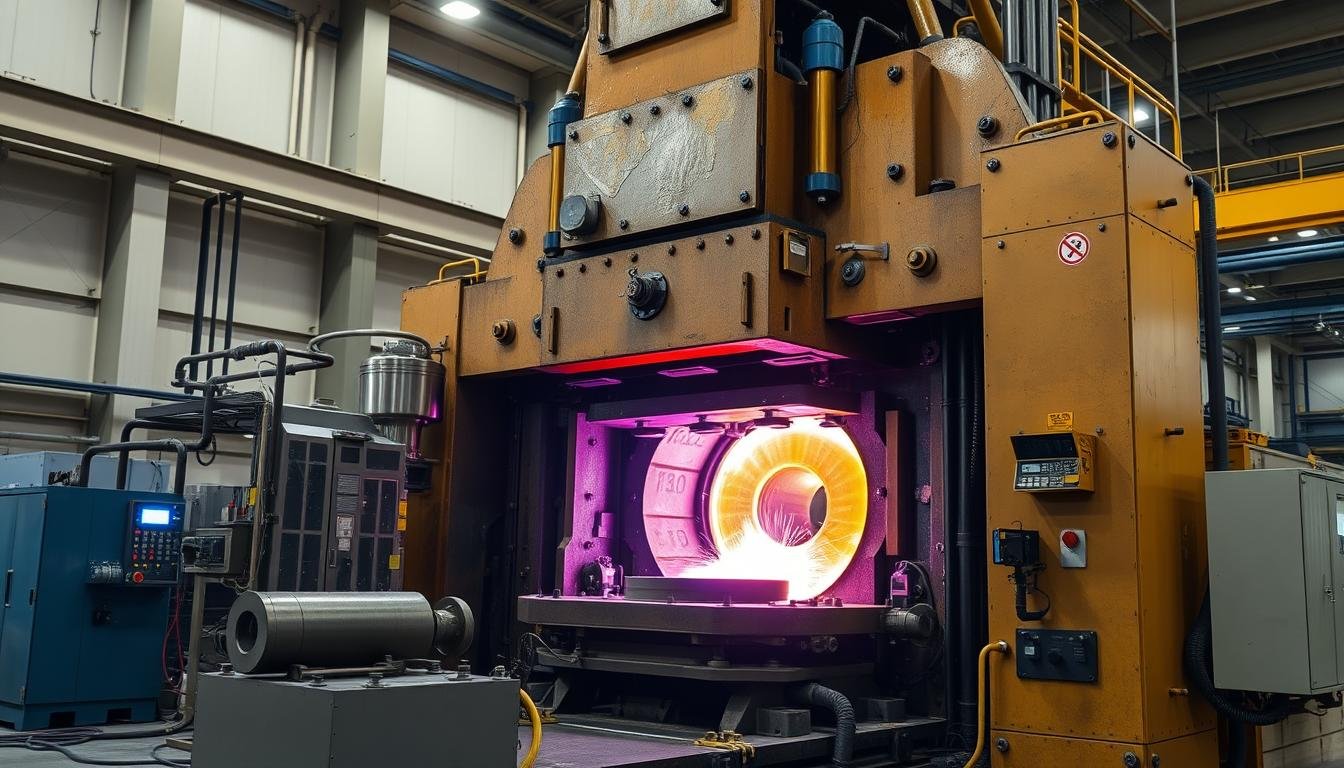
Fundamental Principles of Forging Press Technology
A forging press applies controlled pressure to metal, deforming it into specific shapes while improving its structural integrity. Unlike casting methods that melt metal, forging maintains and enhances the material’s grain structure, resulting in stronger, more durable components with superior mechanical properties.
MAIKONG’s advanced hydraulic forging press in operation
The effectiveness of a forging press operation depends on several key factors: the applied force, die design, material temperature, and deformation rate. By precisely controlling these variables, MAIKONG achieves exceptional dimensional accuracy and material properties in our forged components.
Discover MAIKONG’s Forging Expertise
Looking for precision-forged components with superior mechanical properties? MAIKONG combines advanced technology with decades of manufacturing expertise.
Get A Quick Quote
Major Types of Forging Press Systems
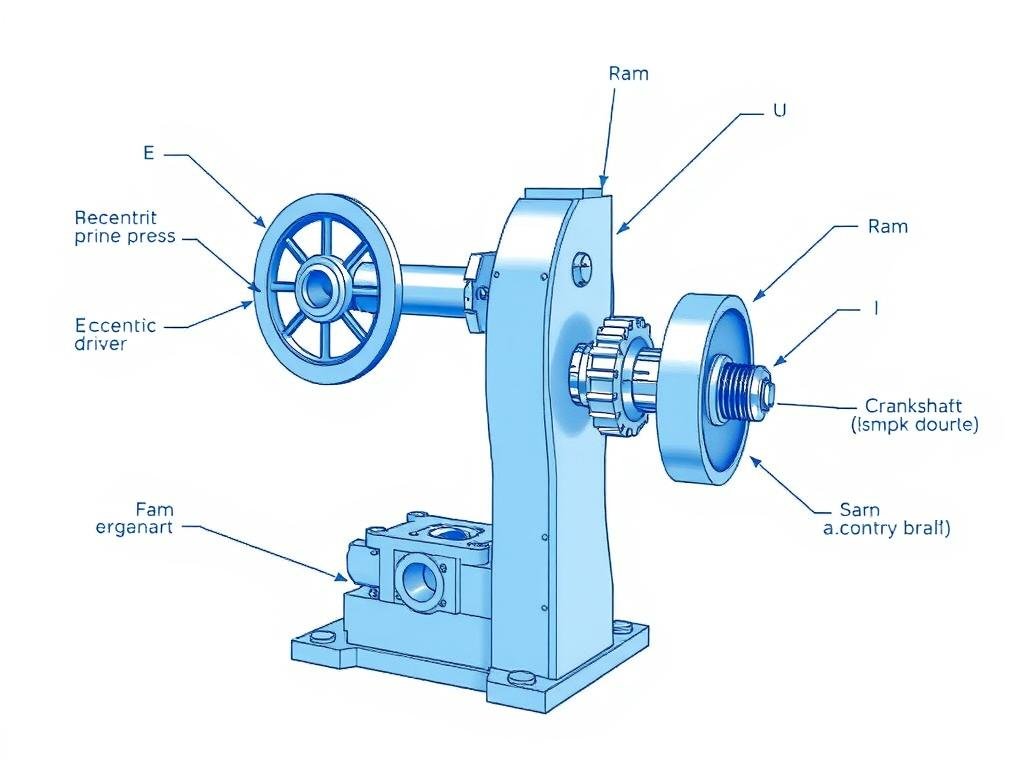
Mechanical Forging Press
Mechanical presses utilize an eccentric crankshaft driven by a motor to deliver consistent stroke length. The ram speed is greatest at mid-stroke, while maximum force occurs near the bottom. These presses excel at producing low-profile forgings with precise dimensions and minimal draft requirements.
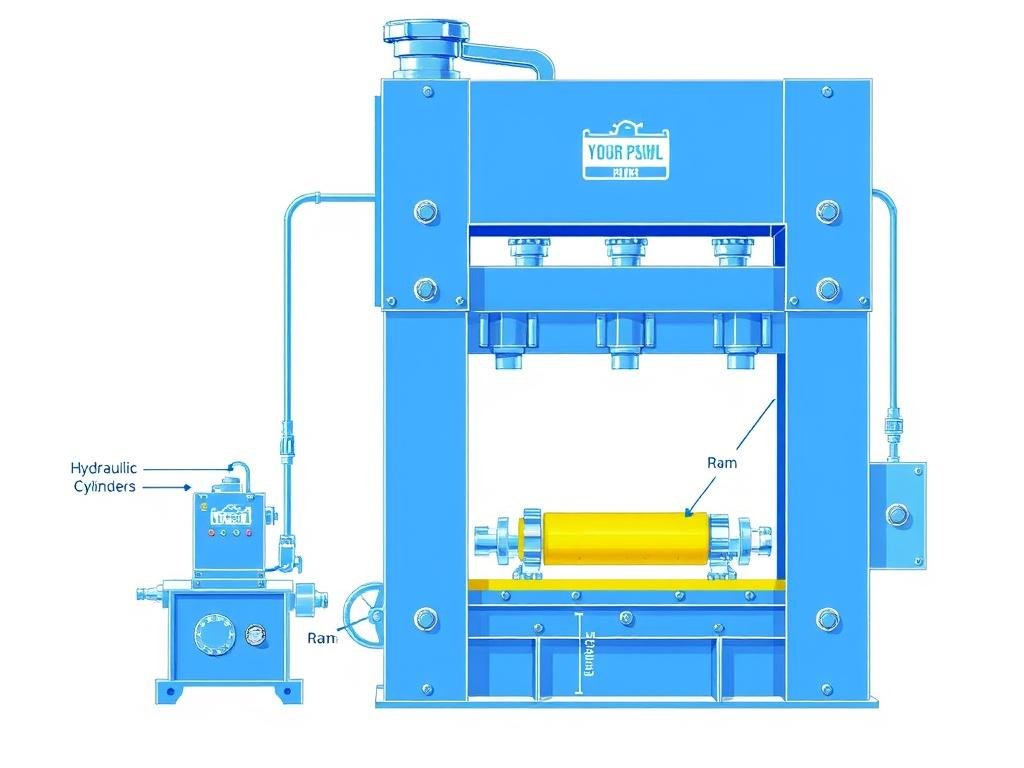
Hydraulic Forging Press
Hydraulic presses deliver controlled force through fluid pressure, offering adjustable stroke length and force. While typically slower than mechanical presses, they provide superior control and are ideal for precision applications, open-die forging, and working with challenging materials.
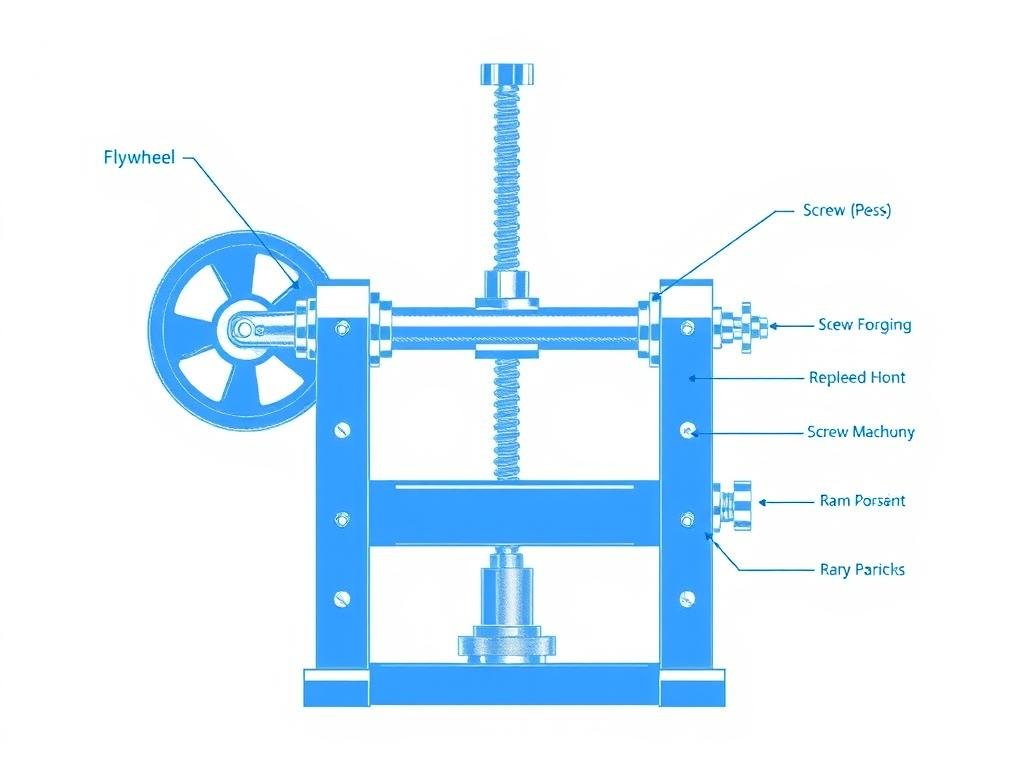
Screw Forging Press
Screw presses convert rotational energy from a flywheel into linear force through a screw mechanism. These versatile machines offer programmable stroke and force control, making them suitable for a wide range of forging applications with minimal die contact time.
At MAIKONG, we utilize all three forging press technologies, selecting the optimal system based on specific application requirements, material properties, and production volumes. This versatility allows us to deliver superior results across diverse manufacturing challenges.
Forging Press vs. Casting: A Comparative Analysis
Understanding the advantages of forging press technology over traditional casting methods is crucial for selecting the optimal manufacturing process for your components.
| Comparison Categories |
Forging Press Process |
Casting Process |
| Strength and Durability |
Superior strength due to dense, uniform grain structure |
Lower strength due to potential air pockets and inclusions |
| Tensile Properties |
Excellent tensile strength and resistance |
Reduced tensile strength compared to forging |
| Fatigue Resistance |
Enhanced resistance against cyclic loading and fatigue failure |
Lower fatigue resistance, especially under dynamic loads |
| Dimensional Accuracy |
Precise dimensional control with tight tolerances |
Potential inconsistencies due to shrinkage during cooling |
| Surface Finish |
Smoother surfaces with reduced post-processing requirements |
Often requires additional machining to address surface defects |
| Grain Structure |
Directional grain flow for improved mechanical properties |
Random grain structure without directional strengthening |
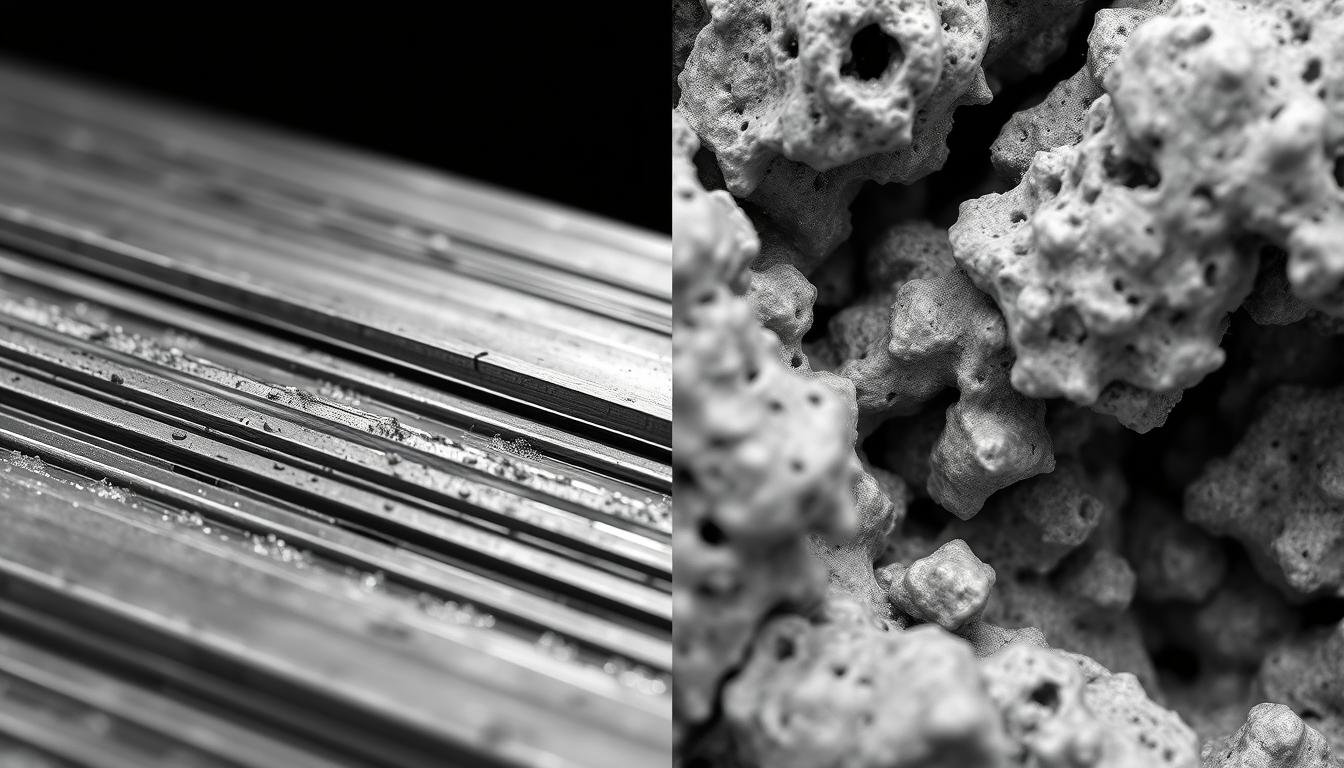
Microscopic comparison: Aligned grain structure in forged components (left) vs. random structure in cast parts (right)
Forging Press Operation Principles
The effective operation of a forging press involves several critical stages, each requiring precise control to achieve optimal results:
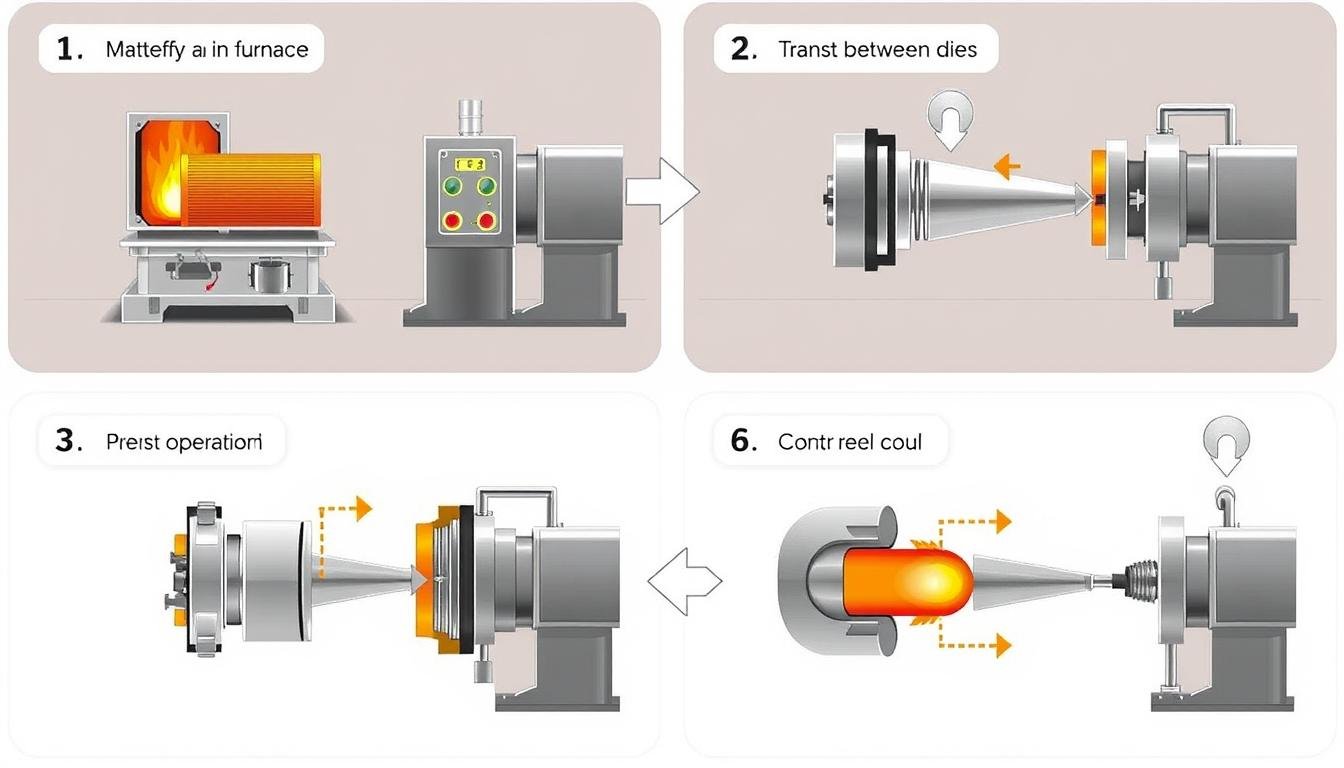
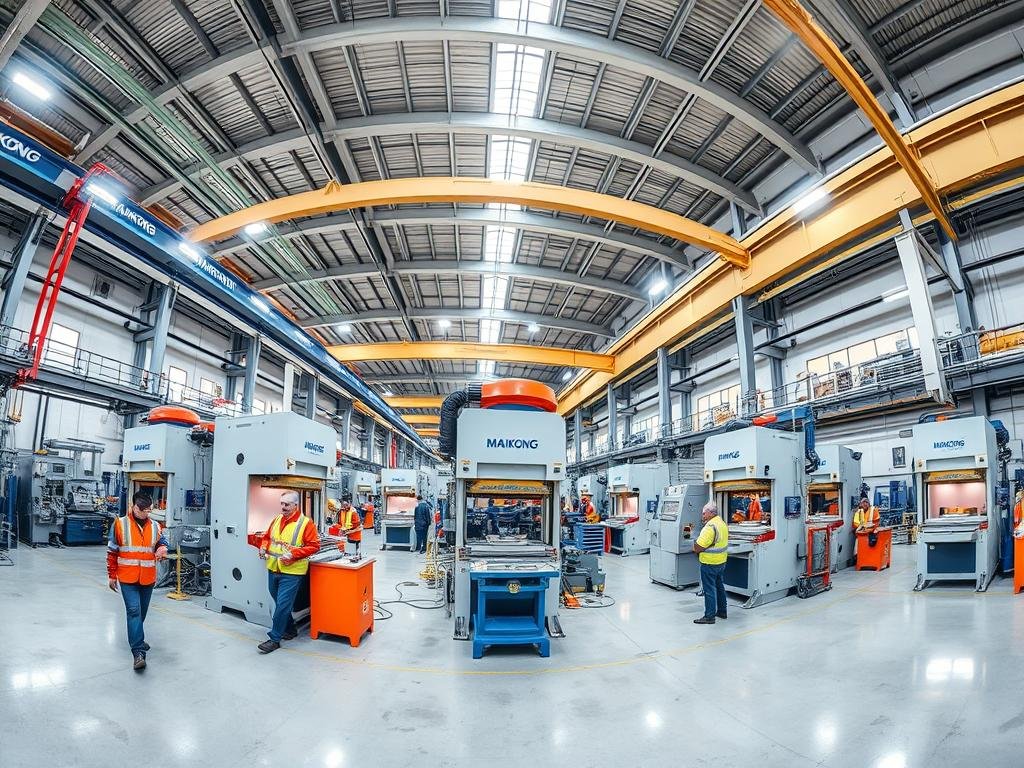
Complete forging press operation cycle at MAIKONG manufacturing facility
- Material Preparation: Raw material is cut to appropriate stock size and heated to optimal forging temperature, typically between 900°C and 1250°C depending on the alloy.
- Die Preparation: Precision-engineered dies are installed in the press and preheated to reduce thermal shock and extend die life.
- Material Positioning: The heated workpiece is precisely positioned between the dies to ensure proper material flow and die filling.
- Force Application: The forging press applies controlled force to deform the material into the die cavity, with pressure ranging from 17 to 40 tons depending on the application.
- Controlled Cooling: After forging, the component undergoes controlled cooling to achieve desired microstructural properties.
- Post-Processing: Depending on specifications, additional operations such as trimming, heat treatment, or machining may be performed.
At MAIKONG, our advanced forging press systems incorporate precise control mechanisms that monitor and adjust these parameters in real-time, ensuring consistent quality across production runs.
MAIKONG’s Comprehensive Forging Press Capabilities
Our state-of-the-art manufacturing facility in GD, SZ houses advanced forging press equipment and supporting technologies that deliver exceptional quality and consistency:
Our Manufacturing Excellence
- 60+ CNC machines with 100+ tons monthly processing capacity
- Advanced hydraulic forging press systems (17-40 ton capacity)
- Precision die design and manufacturing capabilities
- Controlled atmosphere heat treatment facilities
- State-of-the-art material testing laboratory
- Comprehensive quality control systems
- ISO 9001:2015 certified manufacturing processes
Become a MAIKONG Distribution Partner
We’re seeking US distributors for our high-quality, cost-effective forging and machining solutions. Join our growing network of successful partners.
Explore Partnership Opportunities
Industrial Applications of Forging Press Technology
MAIKONG’s advanced forging press capabilities serve diverse industries with precision components that meet the most demanding specifications:
Automotive
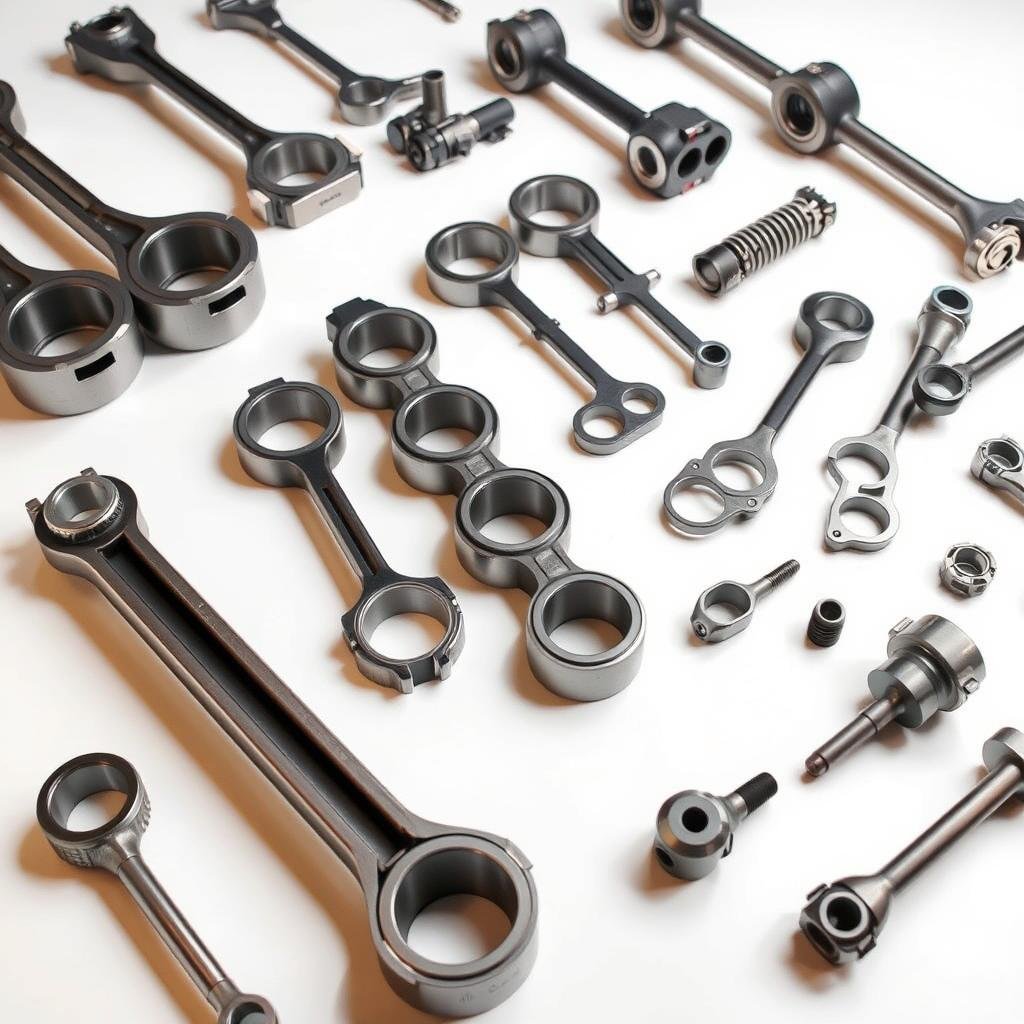
Our forging press systems produce critical automotive components including connecting rods, crankshafts, steering knuckles, and suspension components with exceptional durability and fatigue resistance.
Aerospace
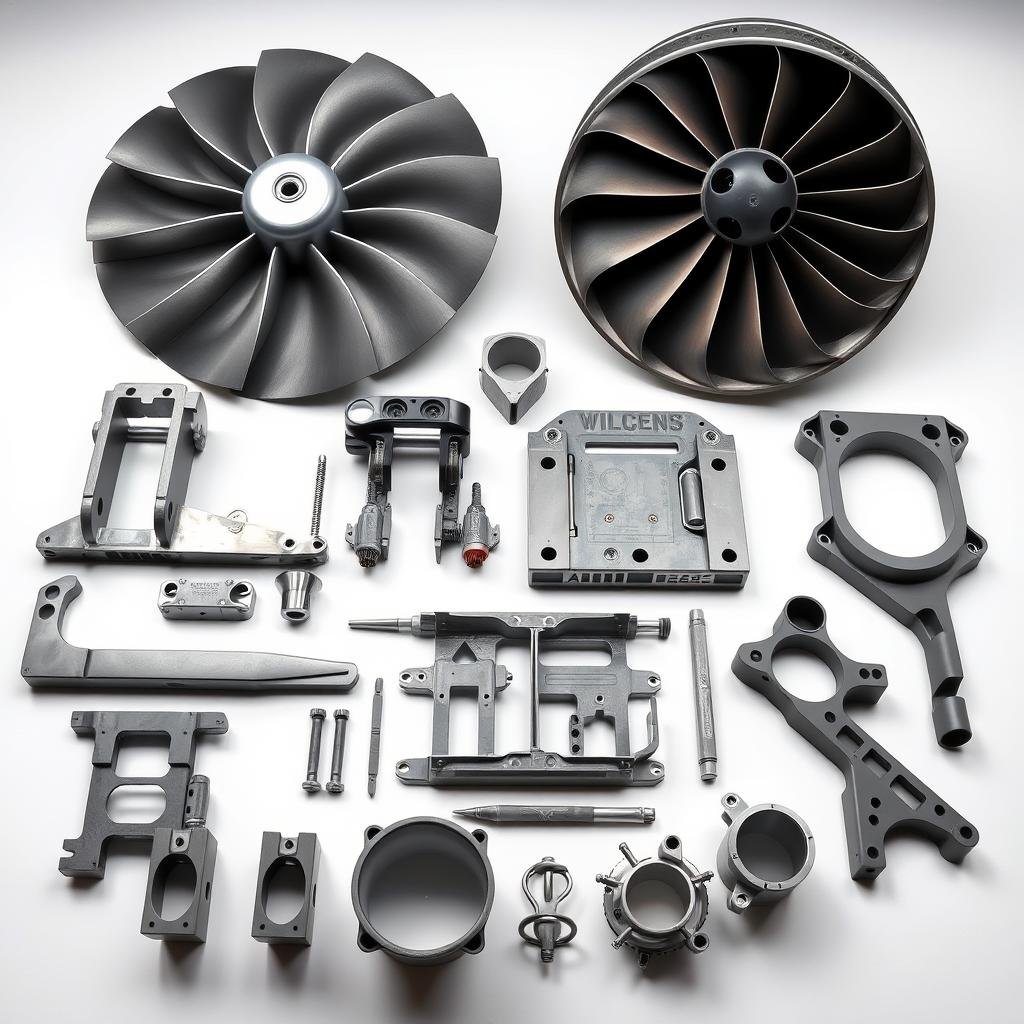
Aerospace applications demand the highest standards of material integrity and performance. Our forging press technology delivers lightweight yet robust components for critical aerospace systems.
Industrial Machinery
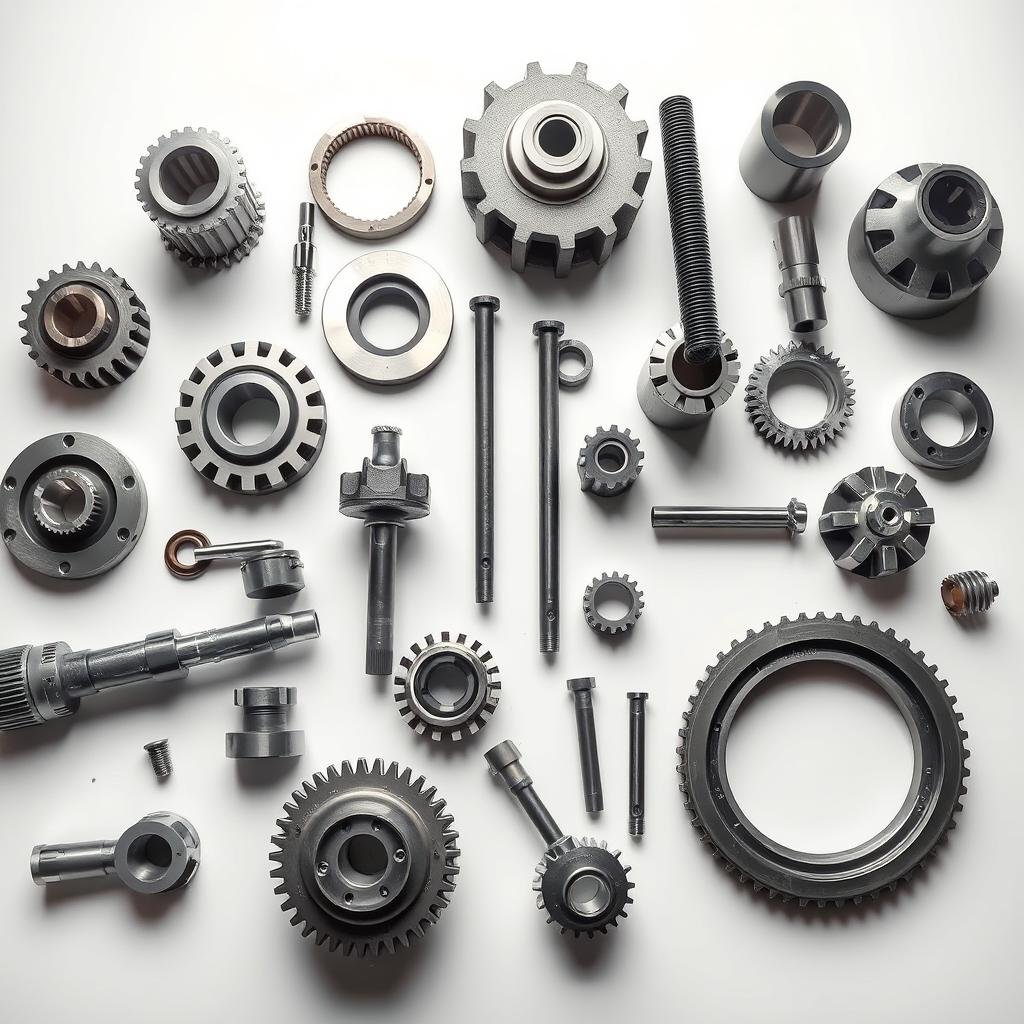
Heavy-duty industrial applications benefit from our forging press capabilities, which produce gears, shafts, and structural components with superior wear resistance and load-bearing capacity.
Each application leverages the unique advantages of forging press technology: enhanced mechanical properties, optimized grain structure, and exceptional reliability under demanding operating conditions.
Comprehensive Forging Press Services at MAIKONG
Our end-to-end manufacturing capabilities extend far beyond basic forging press operations, offering a complete solution for your metal component needs:
Design & Engineering
- CAD/CAM Engineering: Advanced design software for early issue identification
- Material Selection: Expert guidance on optimal alloy selection
- Tooling Design: Precision die engineering for optimal material flow
- Process Optimization: Simulation-driven process refinement
Manufacturing Excellence
- Forging Press Operations: Precision force application with advanced control systems
- Heat Treatment: Controlled thermal processing for optimal material properties
- Precision Grinding: Automated robotic grinding for superior surface finish
- CNC Machining: State-of-the-art multi-axis machining for tight tolerances
Finishing & Quality Assurance
- Surface Treatments: Anodizing, painting, laser engraving, and sand blasting
- Dimensional Inspection: Advanced metrology for precise verification
- Material Testing: Comprehensive analysis of mechanical properties
- Quality Documentation: Detailed reporting and certification
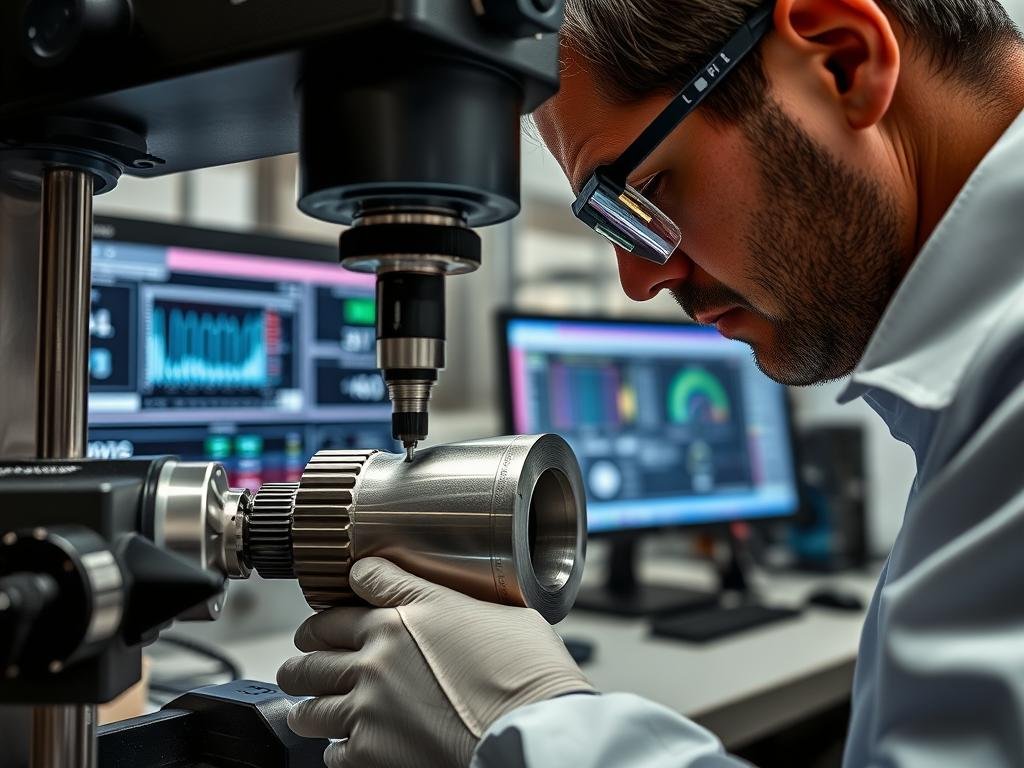
Rigorous quality inspection ensures every component meets exact specifications
Technical Specifications of MAIKONG Forging Press Systems
Our diverse range of forging press equipment accommodates various production requirements:
| Press Type |
Tonnage Range |
Power Requirements |
Stroke Length |
Speed |
Optimal Applications |
| Hydraulic Table Press |
17-25 Ton |
110V/220V |
6″ |
3.5 IPS |
Precision components, custom knife making, small batch production |
| Hydraulic Floor Press |
40 Ton |
220V |
8″ |
2.8 IPS |
Larger components, damascus production, industrial applications |
| Mechanical Press |
30-100 Ton |
380V Three-Phase |
Variable |
Up to 70 SPM |
High-volume production, automotive components |
| Screw Press |
25-80 Ton |
380V Three-Phase |
Programmable |
Variable |
Complex geometries, precision control applications |
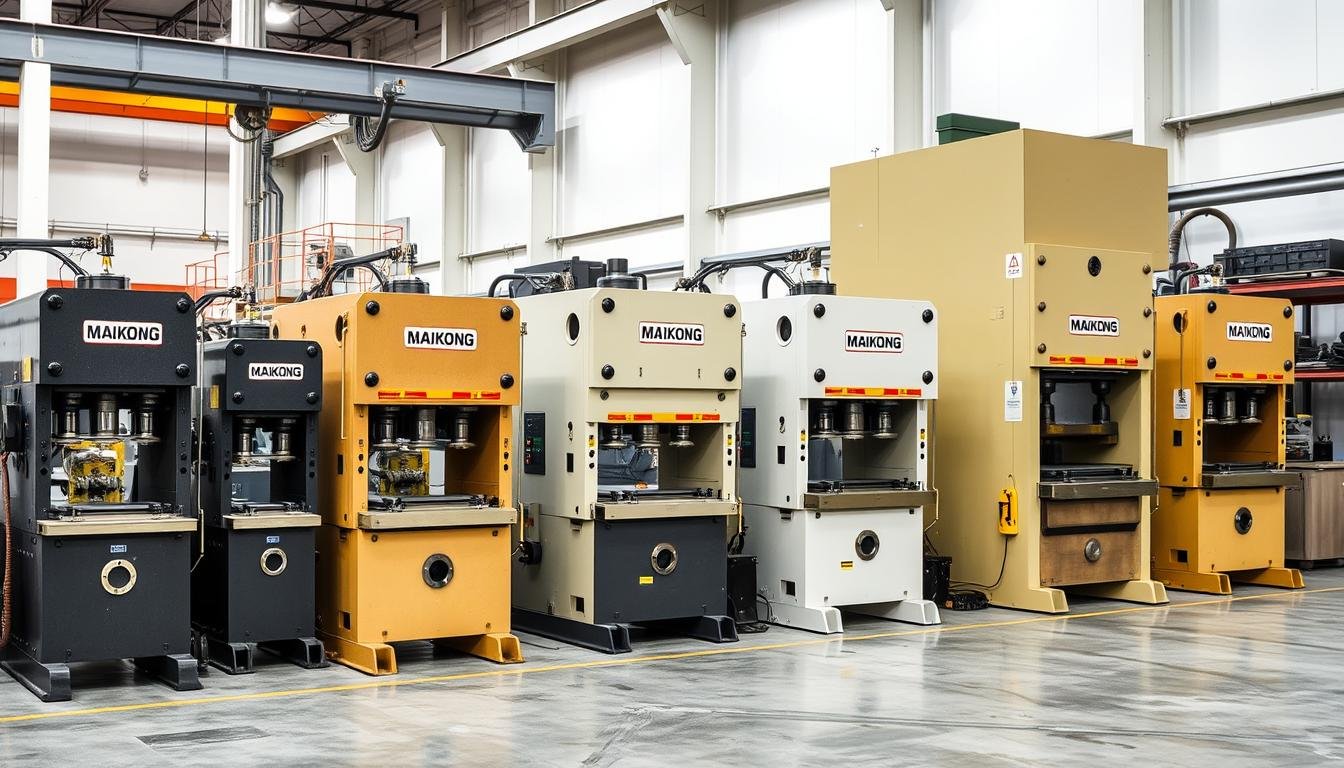
MAIKONG’s comprehensive range of forging press systems
Advancing Manufacturing Excellence Through Forging Press Innovation
The principles of forging press operation represent the foundation of modern metal manufacturing, enabling the production of components with superior strength, durability, and performance characteristics. At MAIKONG, we continue to refine and advance these principles through ongoing innovation, investment in cutting-edge technology, and unwavering commitment to quality.
Whether you’re seeking precision components for critical applications or exploring distribution opportunities for high-quality forged products, MAIKONG offers the expertise, capabilities, and partnership approach to support your success. Contact our team today to discover how our advanced forging press solutions can deliver exceptional value for your business.
Ready to Experience MAIKONG Quality?
Join leading companies who trust our forging expertise for their critical components.
Contact Us Today